

Discover more about our members and digital health community.

From Stigma to Support: The Changing Landscape of Mental Health in the UK
Over the past decade, there has been a growing awareness and acceptance of mental health issues, with more individuals turning to technology for support. Factors such as modern life stress, environmental concerns, and the COVID-19 pandemic have contributed to the rise in mental health issues, leading to the development of health tech startups that leverage technology to create accessible tools and platforms for mental health management and support
Over the past decade, there has been a remarkable increase in awareness and acceptance of mental health issues. More people than ever before are discussing and seeking help for conditions like anxiety, depression, and PTSD. However, the question remains: is the prevalence of mental health issues truly increasing, or are people simply more comfortable acknowledging their struggles and seeking help? As our society becomes more understanding and supportive of mental health, an increasing number of individuals are turning to technology for support. Mental health tech apps have emerged as a popular tool for managing symptoms and promoting well-being. In this blog, we'll explore the rise of mental health tech apps and their role in the ongoing conversation about mental health.
Headlines about mental health have frequently featured phrases such as "record numbers," "sharp increase," and "funding needed." These headlines point to a growing awareness of mental health issues as a major challenge facing the UK and the rest of the world. While the exact causes of the rise in mental health issues are complex and multifaceted, there are several factors that have contributed to this trend.
One major factor is the increasing stress and pressure of modern life, with work, financial pressures, and social media all contributing to a sense of constant pressure and competition. Additionally, there are growing concerns about the impact of environmental factors such as pollution and climate change on mental health. Finally, the COVID-19 pandemic has had a profound impact on mental health, with lockdowns, isolation, and economic uncertainty all contributing to a rise in anxiety, depression, and other mental health issues.
With the growing awareness of mental health issues and the increasing role of technology in our lives, many individuals and organisations are looking for ways to offer effective and reliable solutions to promote mental health and wellness. As we discussed in a previous blog post, the western world is becoming increasingly digitised, with technology playing a significant role in many aspects of our lives.
This trend has led to the rise of health tech startups, which are focused on developing innovative and sustainable solutions to address the mental health epidemic. These startups are leveraging the power of technology to create user-friendly, accessible, and affordable tools and platforms that can help individuals manage their mental health and access support when they need it. By combining the latest advances in technology with evidence-based mental health practices, these startups are driving change in the mental health landscape and providing hope for a brighter future.
Is this a topic of interest to you? Make sure to sign up to our webinar next week ‘Lunch & Learn: Empowering a Safe Digital Future: Tellmi’s Perspective’ where we explore the digital landscape in creating supportive systems.

Navigating the Digital Divide: The Impact of Artificial Intelligence and Digital Illiteracy on Healthcare
The integration of Artificial Intelligence (AI) in healthcare has the potential to revolutionise the way we understand, treat and prevent diseases. However, Tasha Wait explores how with rapid digitalisation, there is a danger of those who struggle to keep up with technology being left behind and facing economic exclusion
By Tasha Wait
2023 has only just begun and it already feels like we are being hit with a new wave of technology. At the end of my master’s studies, I explored the literature of technological incompetence leading to economic exclusion, and even since submission I feel circumstances have already been elevated. In our field, technology forms the foundation of our industry. Digital health, health tech, and so on, all rely heavily on technology. However, as we build and send out our products for B2B or B2C consumption, we often fail to realise that our audiences may not be as digitally literate as we are. And this is where the gap lies.

The integration of Artificial Intelligence in healthcare holds the potential to greatly enhance the way we understand, treat, and prevent diseases. From faster and more accurate diagnoses to personalized treatment options and improved clinical efficiency, AI has the potential to revolutionize the healthcare system. However, with the rapid expansion of technology, there is a danger of those who struggle to keep up with digitalization being left behind, leading to basic healthcare needs becoming inaccessible to a large demographic.
One of the main concerns with the integration of AI in healthcare is the level of distrust that many people have towards technology. This can be due to a lack of understanding and experience with new technology, as well as fears around job loss, privacy, and security. Additionally, there may be concerns about the potential negative effects of excessive technology use on mental and physical health. All of these factors contribute to the digital divide.
To gain a deeper understanding of how new technologies will be adopted and integrated into our daily lives, the Diffusion of Innovation theory can be applied. This theory analyses factors such as ease of use, compatibility with current lifestyles, and perceived benefits to anticipate the impact of technology on our future world.
A prime example of the Diffusion of Innovation theory in health tech is the widespread use of telemedicine. Telemedicine refers to medical services and information provided through telecommunication technologies such as video conferencing, mobile apps, and remote monitoring devices. While once met with hesitation, telemedicine has become increasingly accepted and utilized, particularly due to the COVID-19 pandemic. This can be attributed to factors such as its convenience and accessibility, compatibility with the current healthcare system and patients' lifestyles, the opportunity for patients to try it out, and the visibility of its benefits to others.
In conclusion, while the integration of AI in healthcare has the potential to greatly enhance the healthcare system, it is important to understand the digital divide and the impact of digital illiteracy on those who may struggle to keep up with rapid digitalization. The Diffusion of Innovation theory can provide insights into how new technologies will be adopted and integrated into our daily lives, helping to ensure that the benefits of technology are accessible to all.

Member Feature: TellMi
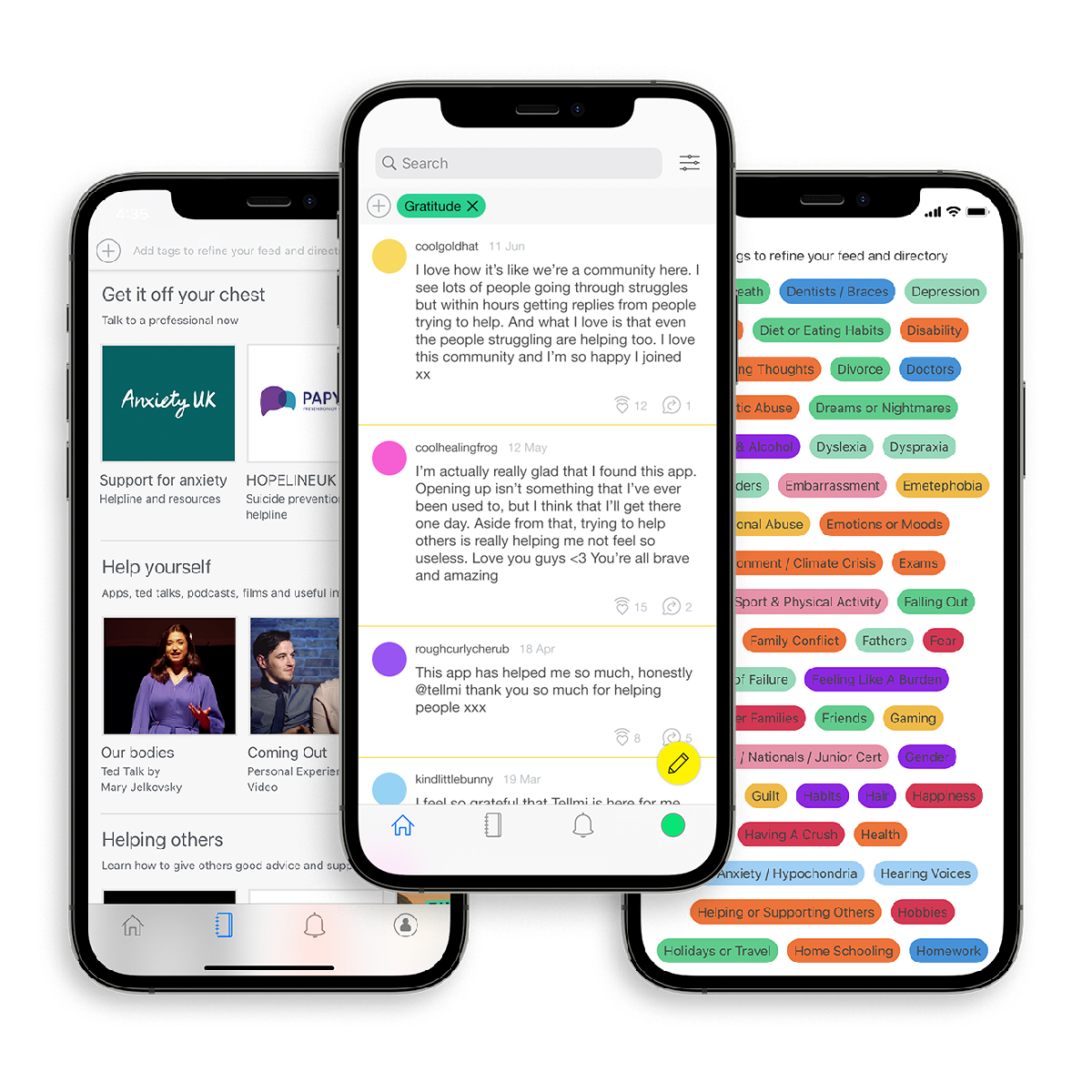
Tellmi (formerly MeeToo,) was launched publicly in September 2017. The multi-award-winning peer support early intervention mental health app, makes it easy for children and young people to talk about difficult things. The reality is one in six children and young people has a probable mental health disorder, over half of which are present before the age of 14.
Tellmi (formerly MeeToo,) was launched publicly in September 2017. The multi-award-winning peer support early intervention mental health app, makes it easy for children and young people to talk about difficult things. The reality is one in six children and young people has a probable mental health disorder, over half of which are present before the age of 14.

Through Tellmi users can anonymously post about anything that is worrying them and receive supportive replies from other people of a similar age. All posts and replies are checked by paid moderators before going live with high-risk posts being redirected to our in-house counselling team for a private reply.
Since launching Tellmi has added a comprehensive support directory feature where we can create educational resources in response to the conversations on the app to further guide the community. To date, Tellmi has seen 70,000 young people seek support via the app with data showing it is an effective way to support those in communities less likely to seek or have easy access to support.

Tellmi’s journey with Health Foundry started in 2017 when CO-CEO Kerstyn Cromley entered a competition, as a result of winning Tellmi was introduced to the NHS Digital Health Team and won a place on their programme. This along with further introductions and exposure to the Health Foundry secured anchor desks. “It has been incredible for us as it is so cost effective and a highly professional environment. We have and continue to benefit hugely from working alongside other companies in a similar position or a little further along than us in their start up journey.”
Our delivery teams will be working closely with our partner schools and organisations over Children's Mental Health Awareness Week to provide education and advice on support seeking. Each month Tellmi offers 500 users access for Children’s Mental Health Awareness Week Tellmi would like to offer the children of Health Foundry associates free access to the Tellmi app which can be downloaded downloaded at Google Play or the App Store.
Lunch & Learn - The cool down: Exploring the Intersection of Anthropology and Health Technology.
Tasha Wait, from Health Foundry, looks back at the latest lunch and learn, covering key points to do with the link between anthropology and health technology
Last week, we had a chance to hear from a group of experts from SOAS about the relationship between health technology and anthropology. They explained how it is important to consider different cultures and how they impact healthcare when designing and implementing new technology.
Our Panel

So, what is it?
The study of anthropology and its means is complex. To truly grasp its history, it is essential to examine it from multiple perspectives. Anthropologists take a holistic approach to understanding the human condition, examining not only the habits and environments of different groups of people, but also how and why they come to be. One disciplinary perspective is social and cultural anthropology, which delves into the study of human societies and cultures and how they come to differ. They also explore how individuals and communities adapt and evolve over time, revealing insights into the complexities of human behaviour and the forces that shape it.

Such an idea can be conceptualised as one word, ‘lifeworld’s’, a new term learnt through the SOAS panel. Defined by Desjarlais & Throop (2011), as ‘the unquestioned, practical, historically conditioned, pretheoretical, and familiar world of people’s everyday lives’.
To study these topics the SOAS panel walked through the wide a variety of research methods used, including participant observation, ethnographic interviewing, public culture analyses, surveys, and visual anthropology. Some anthropologists also focus on design anthropology, which examines the relationship between design and culture. To zoom into one in particular, ethnographic interviewing is a way of gathering descriptive answers by asking the right questions in the right way and over time - the goal is to understand the perspectives and experiences of the people being studied in the context of their everyday lives.
But wait... how is any of this helpful for health/tech?
The link between health technology and anthropology is important because it helps to ensure that technology is developed and used in a way that is sensitive to the needs and perspectives of different cultures. And these areas can be discovered through anthropological studies on consumer wants and needs . In turn this can lead to improved healthcare outcomes and increased access to healthcare for marginalized populations. Additionally, understanding the cultural context of technology use can help to identify and address potential barriers to adoption and use.
To understand further, read below for examples of the mixture of anthropology and health technology:
KlinikEverywhere – ‘has envisioned to use advanced technology to provide care-centric solutions and bring in access to quality care across the length and breadth of the country. The company offers its product on a Software-as-a-Service (SaaS) model and helps with hyper-localization of existing health networks. Our Virtual Klinik and Klinik-in-a-Kiosk solution, are pathbreaking game changers that provide anytime, anywhere convenience to the neighbourhood and rural communities’
EverMind - started as an idea to help people get access to affordable mental health care from therapists around the world. You see, we’re all either from mixed heritage, second generation, or living in a country we weren’t born in. And most of us have English as a second (or even third language.) But as we’ve seen, the world has got a little more challenging. So, we’re trying to help in our own way, by empowering people to benefit from therapy the way everyone in our team has.
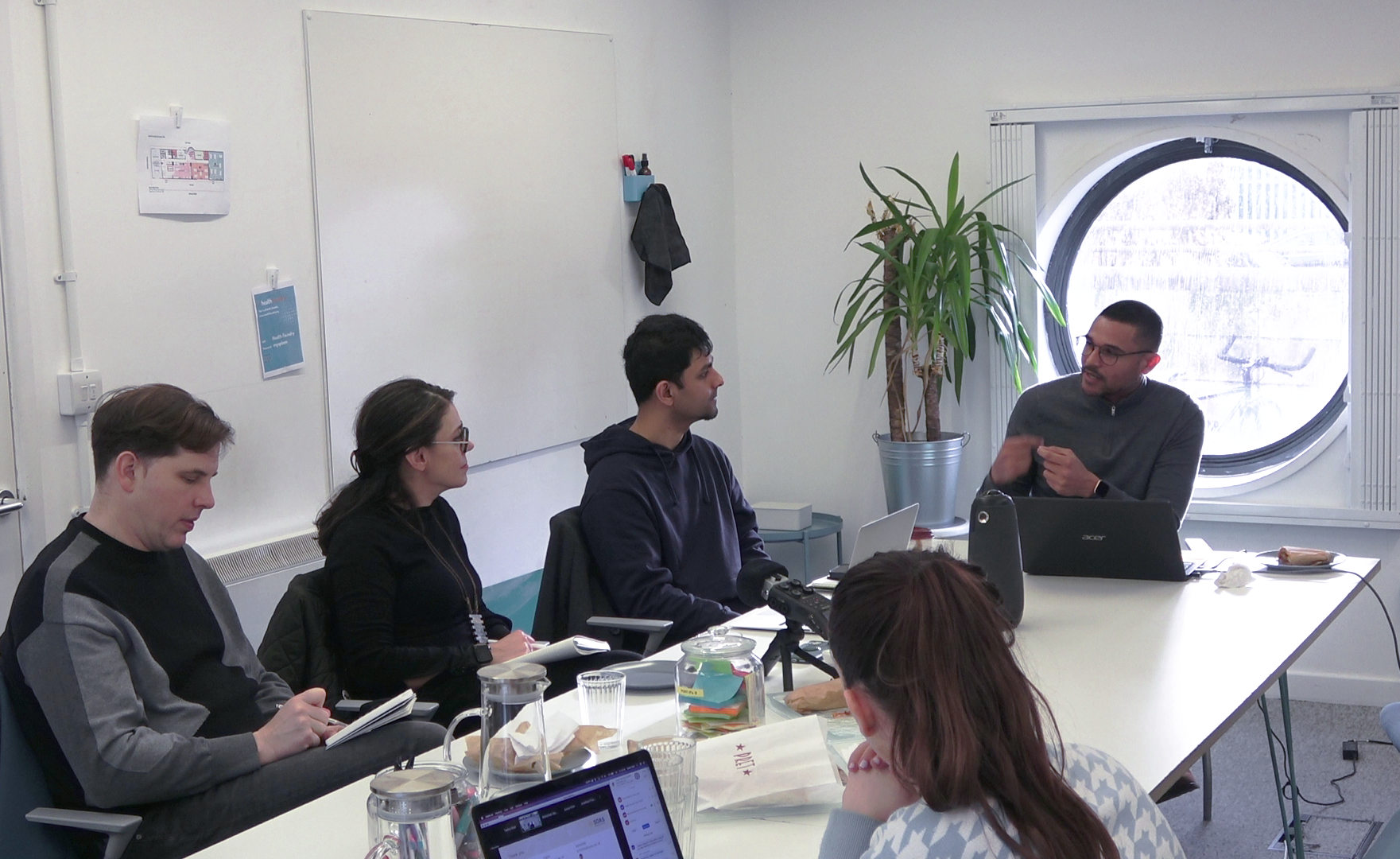
The panel concluded the session by emphasising the importance of adaptability in anthropological studies of health technology. They explained how the field's ability to evolve and stay current with trends and developments is what gives it credibility and relevance.

The Relationship Between Co-Working And Mental Health
Kicking off the new year, Tasha Wait of Health Foundry examines how co-working can positively affect employees’ mental health on behalf of My Mind News.
Working habits are changing
As we enter a new year, the discussions around our working habitats and mental health have never been more evident. As we move away from the pandemic and remote living, discussions around the impacts of such isolation are accelerating and becoming more understood to have been a substantial and sudden change in our lives.
Post-Covid trends see occupancy of office space in London at just 64% of its pre-pandemic capacity, with data showing utilization slowly picking up at the end of the second quarter of 2022 but then halted by the cost-of-living crisis after that. London is the most expensive city for real estate in Europe, averaging around £150 per square foot.
Is remote working for everyone?
Remote working seemed like a utopic solution to the global problem, offering much more flexibility and quality time at home. However, the cracks started to show as the world opened up again.
The impromptu isolation quickly drew in pain points, with many people going the whole day without speaking to anyone unless virtually via a screen. Surveys show 67% of those questioned said they felt less connected to their colleagues, and 56% said they found it harder to switch off.
Meanwhile, BBC data suggests that up to 80% of UK workers feel working from home has negatively impacted their mental health. Evidencing this point, My Mind News recently reported that human connectivity is the single most important thing that makes us happy.
That said, different demographics will experience remote working differently. For single mothers, home working allows them to find a better balance, whereas a recent student embarking on their new career in a new city will struggle to gain social connections.
Co-working and mental health
So how does co-working offer a solution which differs from the tradition of renting office space in benefiting employees’ mental health? Two key pillars of co-working can be evaluated – community and flexibility.
Community
The human need to belong in a community has long been understood, as this helps establish our self-identity, become accepted, and make us feel part of something bigger than ourselves.
Such ideologies can be seen throughout our history and also with other species. This can parallel the adverse side effects of working from home as employees can quickly lose touch with the work community they once had or, in some cases, never had.
This can lead to many losing sight of the goals and the company that they signed on the dotted line for. One of many solutions could be adopting a co-working structure into the company environment, as it offers a unique and well-established environment that already holds community at its heart.
Uniquely co-working spaces also offer a diverse and varied range of companies and people to connect with. Such structures benefit those within the startup space whose companies’ remain small in size.
Flexibility
As most of us know, we are currently living through an economic crisis in the UK which is having a massive ripple effect across most of the economy. Such impacts have made many budgets tighter and money conscious.
This has led many companies to halt signing office rental contracts due to the unprecedented year ahead, even if they are keen to regain their company culture. Co-working spaces allow for more flexibility and cheaper alternatives.
Co-working enables companies to keep a hybrid working structure while not paying full-time rental prices. Many co-working organizations allow the choice of how many days a week or month you might require office space and also offer hot desking for any individuals who want to engage in this type of work.
How can Health Foundry assist?
That’s where Health Foundry fits in – the company prides itself on being a digital health community co-working space. Health Foundry launched in 2016 to provide a supportive ecosystem and physical space for digital health start-ups to create and adopt scalable digital health solutions.
The company has a growing community of members within the health and digital tech sectors and a team that facilitates connections across the healthcare system. 91% of members have said its space has been essential to their journey.
Here are some of what Health Foundry’s clients are currently up to –
Bionabu is the world’s first Medtech expert knowledge marketplace. They connect entrepreneurs, companies, and private and public institutions with vetted expertise and education to drive forward innovation.
Liberate Pro Healthcare Ltd – The Liberate Pro platform improves patient education and efficacy, increases patient engagement, and, most importantly, decreases societal health inequalities.
Tellmi is a multi-award-winning app that provides young people with anytime, anywhere access to peer and counselor support, as well as a range of mental health self-management tools that can be accessed 24/7. Over 75,000 young people are on Tellmi, which can be downloaded from the Apple App Store and Google Play for Android.
Protecting employees’ mental health through Health Foundry
Health Foundry works to provide more than just desks. It gives companies a home to grow within and a community to thrive.
The collaboration amongst its members is the extension of the enterprise the organization strives for. It supports everyone through their journey with tailored made programs, events, and connections that give scalable solutions.
As we progress into 2023, many will start thinking about taking the jump to change working habits. Health Foundry would love to see new friendly faces joining it, so visit their website and contact them should you require further information on their offering.
My Mind News is excited by the benefits afforded by Health Foundry through its co-working offerings, and we look forward to seeing how the organization grows and develops as the general workplace environment continues to shift and change throughout 2023.